


Every L&D leader I’ve talked to over the years has some version of the same story. They built out a genuinely good course library. They got buy-in from leadership, wrote clear objectives, maybe even brought in outside experts to record the modules. And then they watched login numbers stay flat, or worse, decline a few weeks after launch.
If that sounds familiar, you’re not doing anything wrong that a better video thumbnail would fix. The problem usually isn’t the content. It’s everything around the content, the small daily decisions that determine whether someone opens the app at all. Auzmor spends a lot of time thinking about exactly this question, because “build good learning content” and “get people to actually use it” turn out to be two entirely different problems with two entirely different solutions.
Let’s start with what you’ve probably already tried. Badges, streak counters, maybe a leaderboard with a small prize attached. These can create a short burst of activity, but the research on gamification in learning is pretty clear that the novelty wears off fast unless it’s tied to something an employee actually cares about (we’ve written more about why gamification alone tends to fall short). So if badges aren’t the answer, what is?
Relevance beats reminders
The single biggest predictor of whether someone opens a learning app isn’t how good the content is. It’s whether they believe, before they even open it, that something inside will actually help them do their job better this week. LinkedIn’s 2025 Workplace Learning Report found that career-connected learning, content employees can directly tie to where they want to go next, is one of the strongest levers L&D teams have, stronger than volume of content or flashy delivery formats. One learning executive quoted in the report summed it up well: what works for younger employees works for everyone, because people generally want to see how learning connects to something that actually matters to them.
That’s a harder problem than it sounds, because relevance isn’t a fixed property of a course. A negotiation skills module is relevant to a sales rep prepping for a renewal call and completely beside the point for someone in finance closing the books. Static course catalogs, which is still the default in a lot of learning apps, ask employees to do the work of figuring out relevance themselves. Most won’t bother. This is a big part of why personalizing learning paths by role and skill gap matters so much more than people tend to give it credit for.
Friction is the silent killer
Here’s something that gets underestimated constantly. Even when the content is relevant, employees won’t open the app if reaching it takes real effort. Deloitte’s research on workplace learning found that employees spend, on average, about one percent of their workweek on professional development. That’s less than five minutes a day. If getting to a course means logging into a separate portal, remembering a separate password, and clicking through three menus, that five-minute window closes before anyone gets there.
This is really a design problem more than a motivation problem. Learning that lives inside the tools people already use, on a phone during a commute, inside a notification, in the flow of an actual task, gets opened. Learning that sits one extra login away mostly doesn’t. Mobile-first access matters here for a fairly unglamorous reason too. Most frontline and field employees don’t sit at a desk with an LMS tab open all day, and if the app doesn’t work well on a phone, it effectively doesn’t exist for a large chunk of your workforce. We’ve gone deeper on how a proper learning experience platform changes this dynamic in an earlier piece, worth a read if you want the fuller picture. It’s part of what shapes how Auzmor Learn is built, putting the content where work already happens rather than asking employees to go find it.
Managers matter more than the app does
This one tends to surprise people, but it shouldn’t. Gallup’s long-running research on workplace engagement found that who manages a team explains far more of the gap between highly engaged and disengaged teams than compensation, perks, or company-wide initiatives combined, upward of 70 percent of the variance, by their estimate. That same pattern shows up in learning specifically. LinkedIn’s 2025 report found that only 15 percent of employees said their manager had helped them build a development plan in the past six months, even though roughly half of employees point to a lack of manager support as a real barrier to growth.
Think about what that means in practice. If a manager never mentions the learning app, never references a course in a one-on-one, never treats a finished module as worth a two-line acknowledgment, the app becomes something that exists in theory but not in daily practice. Employees take their cues about what actually matters from the person they report to, not from an email announcing a new platform. The fix isn’t complicated, but it does take intention. Give managers a quick way to see what their direct reports are working on, and a nudge to bring it up, and usage tends to follow.
Timing and context decide the rest
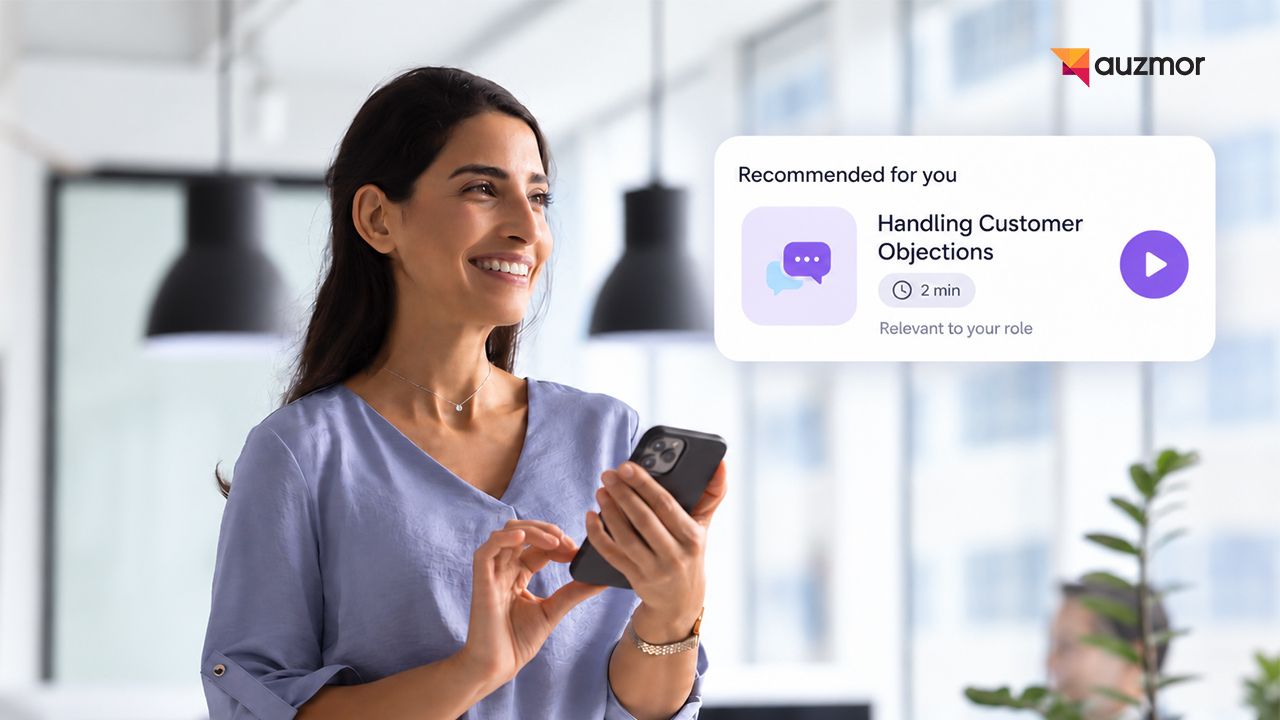
Even relevant content that’s easy to reach, with a manager who cares, can go unopened if it shows up at the wrong moment. Nobody wants a forty-minute compliance module pushed to their phone at six on a Friday. A two-minute refresher on handling a tricky customer objection, surfaced right before a call, is a different story entirely.
This is where how content gets surfaced starts to matter almost as much as what the content actually is. Auto-curated playlists that adjust based on role, recent activity, or upcoming tasks solve a real problem here, because they remove the burden of employees having to know what they need before they can go looking for it. The apps winning attention right now tend to be the ones doing that curation work themselves, rather than handing employees a search bar and a wall of thumbnails and hoping for the best.
Measuring the right thing
One more piece worth naming, because it quietly shapes everything above. A lot of organizations still report on completion rates as if that’s the goal. It isn’t. Completion tells you someone clicked through to the end of a module, not that they learned anything or that it changed how they work. Chasing completion is part of why gamification and mandatory targets can feel hollow to employees. People can usually tell when the metric being optimized for isn’t really about them. Looking instead at engagement over time, application on the job, and whether managers are reinforcing what’s learned tends to produce a far more honest picture of whether a program is actually working.
Where that leaves you
None of this adds up to a single fix you can roll out next quarter and call finished. Relevance, friction, manager behavior, timing, and how content surfaces all interact with each other, and neglecting any one of them tends to undercut the rest. But there’s a reasonable order to work through it. Start by checking whether your content is organized around roles and moments or around a static catalog. Then look at how many steps stand between an employee having five free minutes and actually reaching something useful. Then check whether managers have any real visibility into what their teams are learning at all.
Most learning apps don’t have a content problem. They have a “does this show up at the right moment, in the right place, feeling like it’s actually for me” problem. That one is solvable, once you know where to look.
If you’re working through this at your own organization, it’s worth taking a look at how platforms like Auzmor Learn approach personalization, mobile access, and manager visibility as one connected system rather than separate features bolted onto an old LMS. A better platform won’t fix culture by itself. It just makes it a lot easier for the right habits to stick.